Nanobubble Technology
Ultra-fine bubbles with extraordinary physical properties — revolutionizing oxygen transfer, disinfection, and biological treatment performance.
Nanobubble Technology
Research
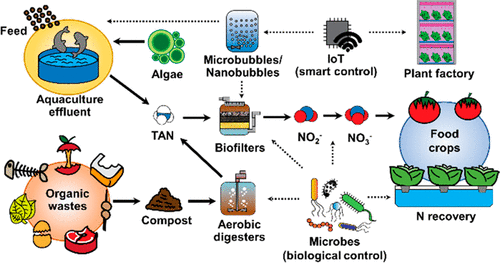
Nanobubbles (NB), previously defined as gas-filled bubbles smaller than 1.0 μm, are now characterized as having diameters within 100–200 nm. Produced via hydrodynamic cavitation, these bubbles exhibit distinct properties like high oxygen solubility, prolonged stability in water, and the generation of reactive oxygen species (ROS).
While various applications — including enhancing plant growth, seed germination, microbial proliferation, and micropollutant removal — have been noted, our research rigorously investigates nanobubbles' benefits in wastewater treatment, agriculture, and aquaponics. Our lab was among the first to demonstrate that ozone nanobubbles achieve significantly greater disinfection efficiency than conventional microbubbles at equivalent doses.
- Oxygen nanobubbles for enhanced aerobic biodegradation
- Ozone nanobubbles for advanced oxidation and disinfection
- Nanobubble generation, characterization, and long-term stability
- Micro-aeration to improve sulfide and VFA utilization in anaerobic digestion
- Agricultural applications: plant growth and seed germination enhancement
- Reactive oxygen species generation and mechanisms
- Nanobubble technology in anaerobic digestion

Research Media & Publications


Nanobubble Technology in Action
Watch our nanobubble research translate into sustainable, real-world infrastructure applications.