Our Research Areas
Six interconnected research domains advancing waste-to-resource biotechnologies. Click any area or use the buttons to explore dedicated pages with full detail, real lab photos, videos, and publications.
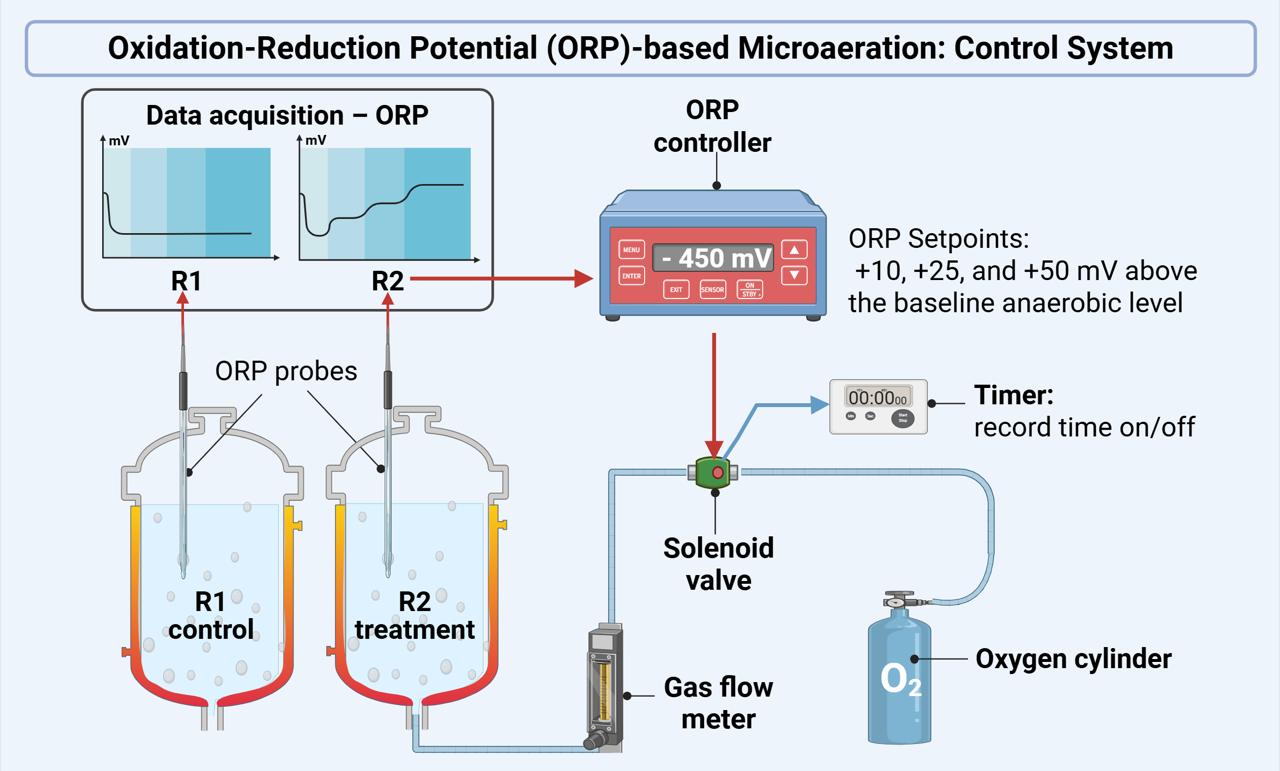
Anaerobic Digestion & Microaeration
We investigate microbial consortia in anaerobic digestion to maximize biogas yields from food waste, agricultural residues, and wastewater sludge. Our micro-aeration research has reshaped how the field thinks about H₂S control and methane optimization.
- High-solids co-digestion of food waste and biosolids
- Micro-aeration integration for sulfide control
- Temperature-phased and psychrophilic digestion
- Digestate valorization and nutrient recovery

Nanobubble Technology
Nanobubbles (<200 nm) exhibit extraordinary properties — long residence times, high internal pressure, and ROS generation. We harness these to improve biological treatment, disinfection, and agricultural applications including plant growth enhancement.
- Oxygen and ozone nanobubble applications
- Enhanced aerobic biodegradation and disinfection
- Nanobubble aeration in aquaponics and agriculture
- Nanobubble technology in anaerobic digestion

Bioenergy & Biofuels
A signature platform uses Rhizopus oligosporus fungal bioprocessing to simultaneously treat distillery stillage and produce value-added fungal biomass protein — earning an R&D 100 Award and IWA Project Innovation Award.
- Fungal processing of distillery stillage and vinasse
- Biohydrogen production via dark fermentation
- Cellulosic and lignocellulosic biomass pretreatment
- Algae-based biofuel production
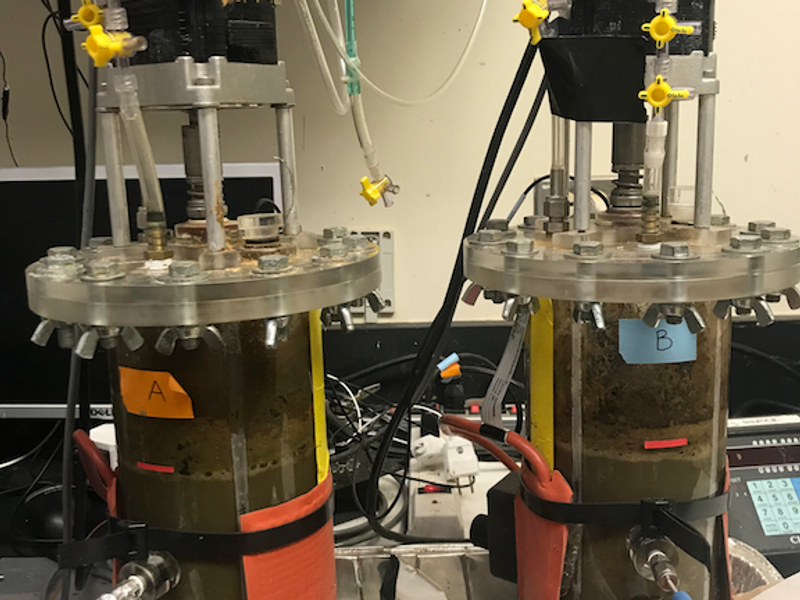
Gas Fermentation
Gas fermentation uses acetogenic microorganisms to convert CO, CO₂, and H₂ from industrial off-gases into valuable chemicals and fuels. Our hollow-fiber membrane bioreactors overcome the mass transfer limitations of sparingly soluble gases.
- Syngas fermentation with acetogenic bacteria
- Bioethanol and acetic acid from CO₂ streams
- Reactor engineering for mass transfer optimization
- Integration with industrial carbon capture

Resource Recovery & Circular Economy
Our biorefinery-inspired approach recovers nutrients, metals, biopolymers, and biochemicals from complex waste streams. Wastes from one process become feedstocks for another — our techno-economic models identify the most commercially viable pathways.
- Struvite and phosphorus recovery from digestate
- PHA bioplastic production from VFAs
- Heavy metal biosorption and bioaccumulation
- Biorefinery integration and techno-economic modeling

Aquaponics Systems
We develop integrated aquaponics systems linking fish cultivation and plant hydroponics. Our decoupled design achieves superior nitrogen utilization and yield, while micro-nanobubble aeration dramatically improves plant growth and nitrification performance.
- Decoupled aquaponics design and optimization
- Microbiome dynamics and nitrification efficiency
- Micro-nanobubble aeration for plant yield enhancement
- Sustainable urban food production systems
Research Approach
Interdisciplinary, systems-thinking science that bridges fundamental discovery with real-world environmental impact.
Mechanistic Understanding
We go beyond empirical observation to understand the molecular and microbial mechanisms underlying our processes — enabling rational, science-driven optimization.
Systems Integration
Our biorefinery-inspired approach designs processes where wastes become inputs — creating circular, resource-efficient systems that minimize environmental footprint.
Global Impact
Through collaborations spanning 50+ countries, we translate laboratory discoveries into scalable, field-ready solutions for developing and developed nations alike.